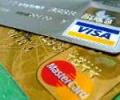
Hackers in support of WikiLeaks have brought down the websites of credit-card giants Visa and MasterCard in the ongoing cyber-war between sympathisers of the whistle-blower site and firms trying to stifle it.

The packet was sent from Athens by air mail two days ago disguised as books and the explosive device hidden inside was "very similar" to the parcel bomb, which exploded on Tuesday at the Swiss embassy in Athens, German Interior Minister Thomas de Maiziere said.

The German cabinet has approved drastic spending cuts to rein in the national budget despite a stronger than expected turnaround in the economy.
That was the compromise formula, said Mukherjee.

In a letter to the European Commission President Jose Manuel Barroso, Merkel and Sarkozy urged the commission to come up with its proposals to introduce tougher regulations on short selling of sovereign bonds and shares of the euro zone nations and credit insurances known as Credit Default Swaps on those bonds and shares before next month's meeting of the EU economic and finance ministers.

Markets became jittery over the Spanish government's take-over at the weekend of regional savings bank Cajasur, which raised speculation that more unhealthy financial institutions may have to be bailed out to prevent a meltdown of the country's banking system.

Both houses of the German parliament on Friday approved the bill on the country's share of 148 billion euros in the rescue package and Koehler signed it at the weekend soon after his return from a visit to China and Afghanistan.
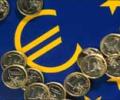
Investors rushed to get rid of their shares and the euro, resulting in renewed market turmoil across Asia and Europe.
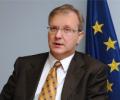
The European Commission has unveiled plans for a radical reform of the European Union's economic governance to tackle the underlying causes of the current debt crisis in the euro area.
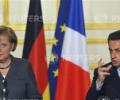
Amid growing concerns that the debt crisis in Greece could spread to other heavily-indebted nations in the region, Germany and France have called for reinforcing economic policy coordination and better internal surveillance to prevent a recurrence of a similar crisis.

The finance ministers of 16 nations that use the euro Sunday night sealed a 110-billion euro bailout package for heavily indebted Greece over three years after the country's government agreed to a new round of tough austerity measures.

Most of the European nations, including the United Kingdom and Germany, reopened their air space on Wednesday after an unprecedented six-day lockdown due to the Icelandic volcanic ash that stranded tens of thousands of passengers globally and caused airlines a loss of $1.7 billion.

The finance ministers of the 16 European Union nations, who have euro as their common currency, finalised the details of their bail out plan for Greece at a conference, chairman of the euro group and Luxembourg Prime Minister Jean-Claude Junker said in Brussels on Sunday.

German chancellor Angela Merkel's centre-right coalition has agreed on a plan to reform the nation's banking system and to impose a levy on the financial institutions to make them accountable for future financial crisis.

The German government will buy stolen data of about 1,500 German tax offenders holding secret bank accounts in Switzerland offered by an informer for Euro 2.5 million on lines of a similar deal two years back for account information from Liechtenstein.

Hundreds of flights were cancelled and train services severely disrupted in Germany, France, Britain, Italy, Spain, Switzerland, Poland and in the Scandinavian countries.
